How to Protect Your Japanese Knife
A good guard does more than cover an edge — it keeps the knife sharp, keeps hands safe, and keeps the blade ready for years of use. Here are the three traditions worth knowing.
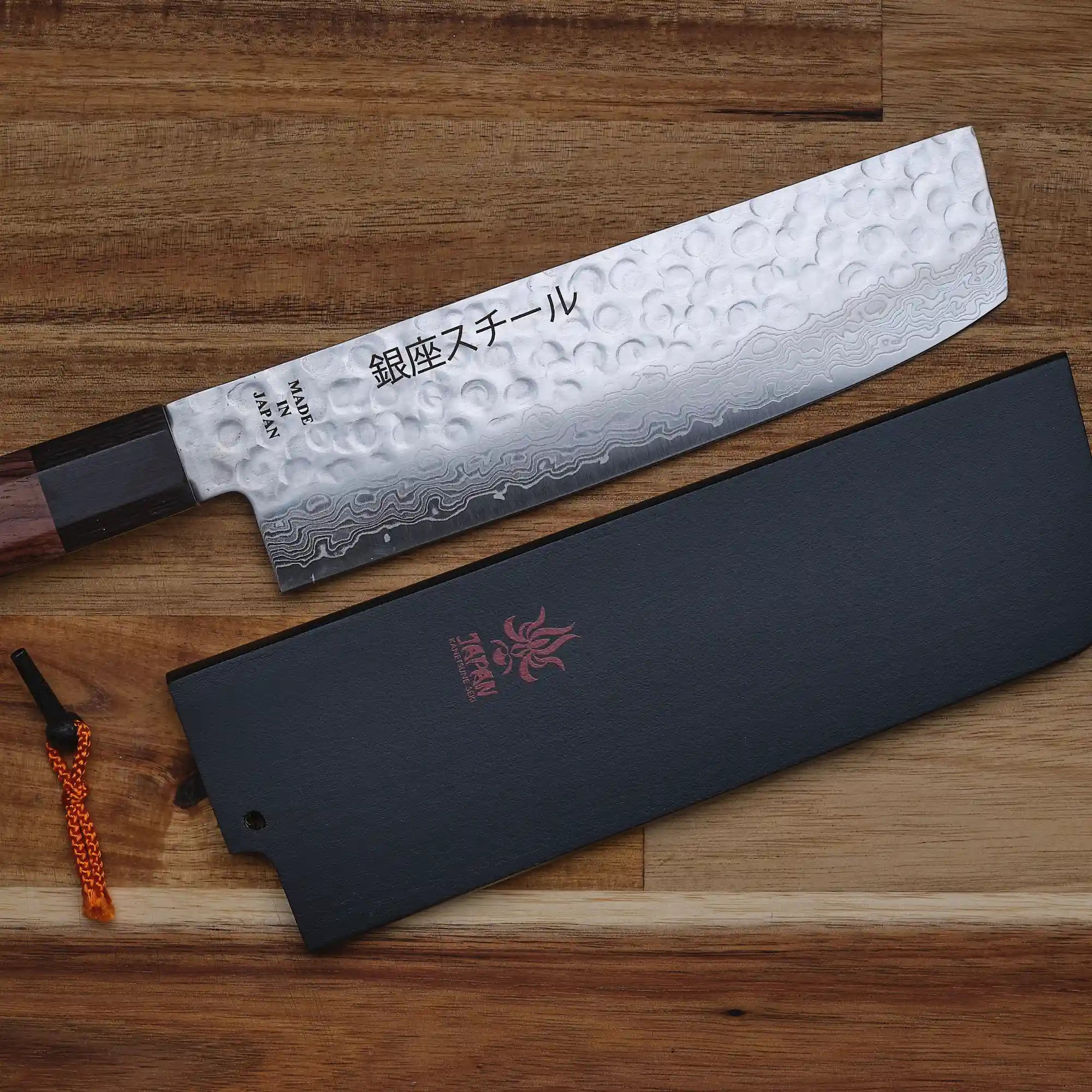
In Japan it is called saya (鞘) — a sheath shaped for one blade alone. But protection takes other forms too, from the moulded plastic guard in a busy kitchen to the leather sheath carried on a belt. Each comes from a different working tradition, and each asks something different of the knife it holds. Below: the Magnolia wood Saya, the PVC guard, and the leather sheath, set side by side.

Carved from Magnolia wood (ho no ki), the traditional Saya is light, naturally moisture-resistant, and gentle against an edge. Most are shaped to one knife alone, held by a friction fit or a small bamboo pin — no rattling, no trapped damp, just a sheath that knows its blade.
- Natural wood grain, quietly beautiful
- Light to carry, light on the hand
- Resists moisture; helps prevent rust
- Exact fit shields the edge precisely
- Costs more than plastic guards
- Wants occasional oiling
- Can crack if dropped or dried out

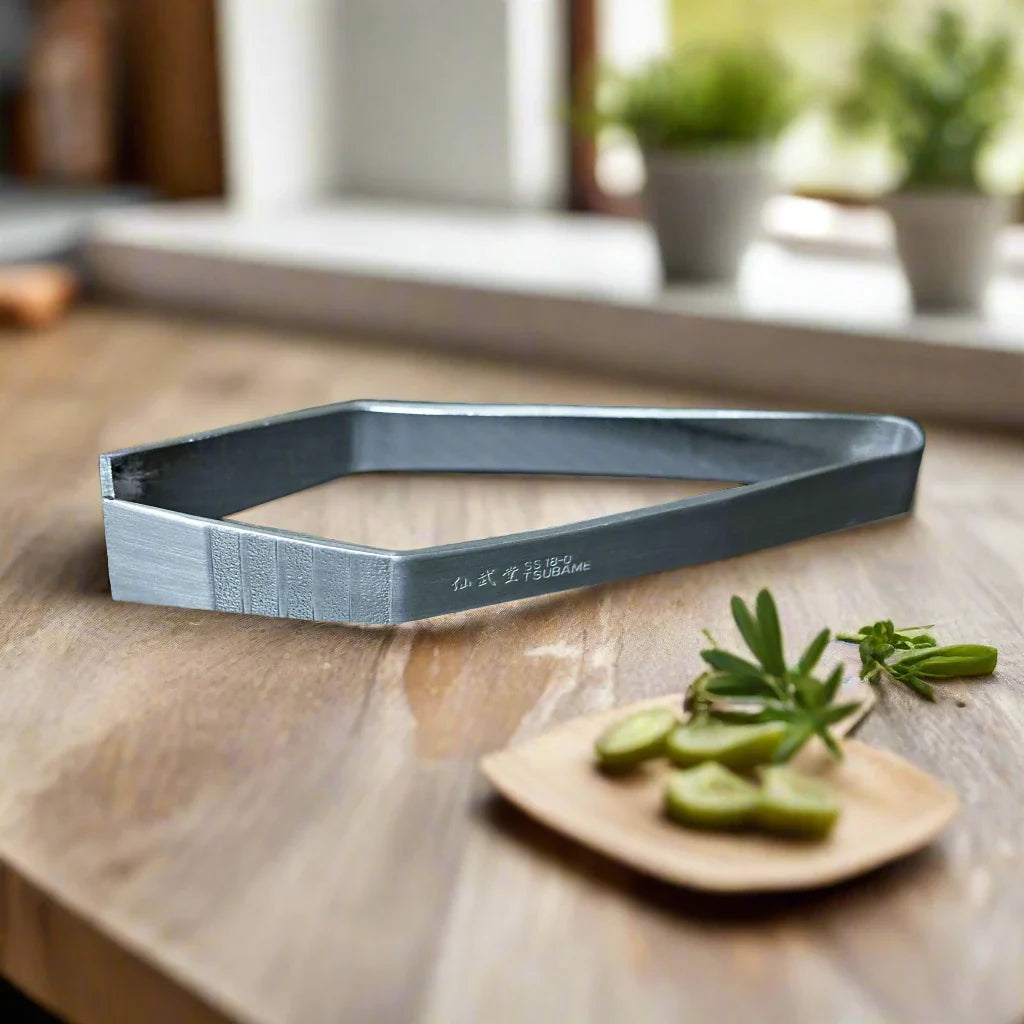
Hard plastic guards trade craft for convenience — tough, easy to sanitise, and sized to fit a range of blades rather than one. A slit-and-slide or clip design holds most kitchen knives well enough. The honest choice for a busy line, or for anyone who'd rather not think about it twice.
- Inexpensive, easy to replace
- Holds up to drops and knocks
- Rinses clean in seconds
- One size fits several knives
- Plain to look at
- Loose fit can let the edge touch
- Not a material that lasts generations

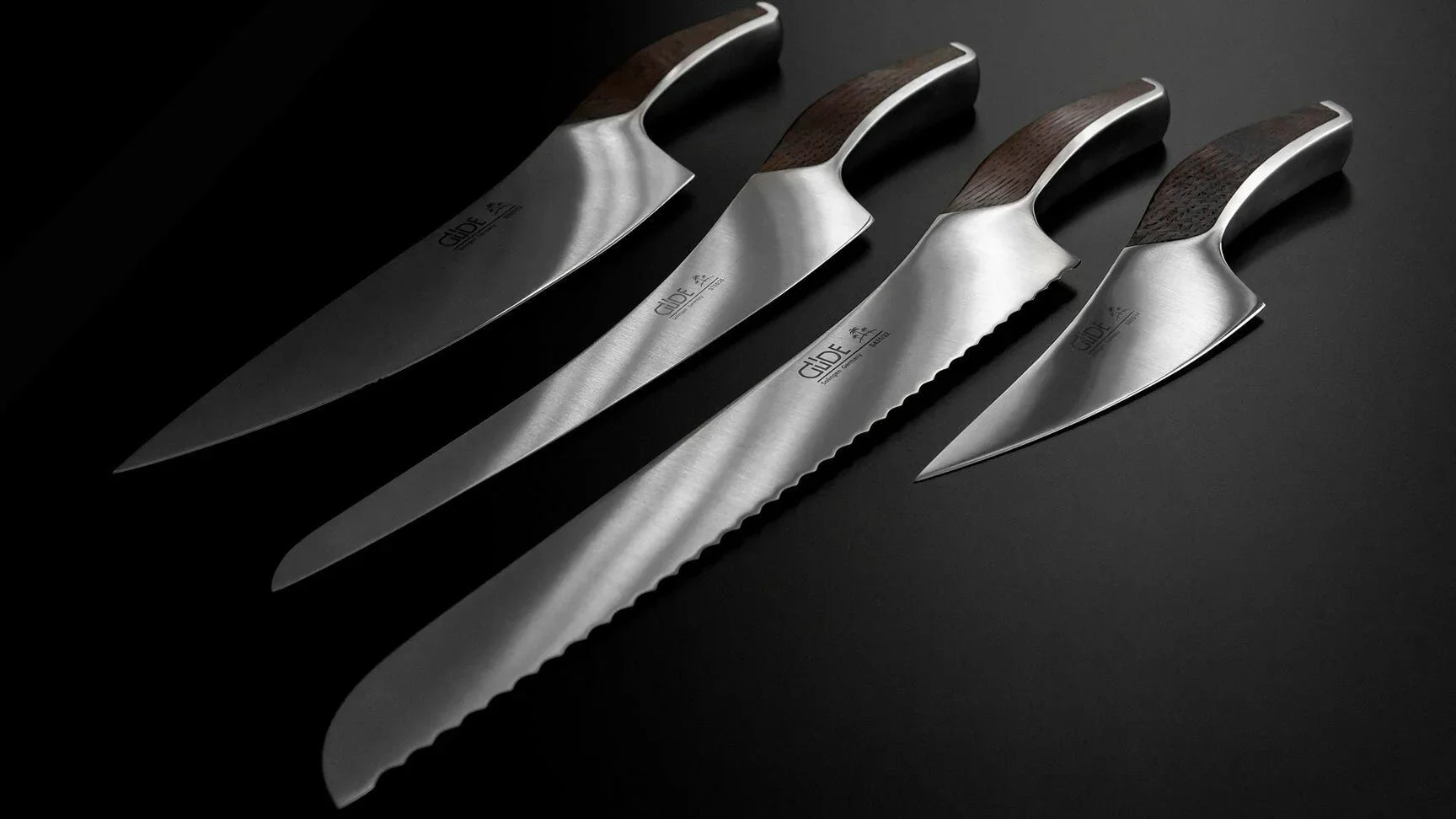
Leather has its own long history alongside the forged blade. Full-grain leather softens and shapes itself to the knife over months of use, closing with a belt loop, snap, or press-stud. Often paired with GÜDE and other European knives, it is a sheath that ages the way a good blade does — better with time.
- Built to last for years
- Ages well; develops real character
- Secure closure, moulds to the blade
- A natural, renewable material
- Quality leather costs more
- Needs conditioning over time
- Heavier than wood or plastic
| Guard Type | Material | Cost | Fit | Upkeep | Best For |
|---|---|---|---|---|---|
| Saya | Magnolia wood | Higher | Custom, exact | Occasional oiling | Premium Japanese knives |
| PVC Guard | Hard plastic | Budget | Universal, adjustable | Rinse & dry | Everyday kitchen use |
| Leather | Full-grain leather | Mid–High | Moulds with use | Regular conditioning | European forged knives |
For a fine Japanese knife — a gyuto, yanagiba, or kiritsuke — a custom Magnolia Saya is the natural partner: it shields the edge without abrasion, draws off moisture, and respects the work that went into the blade. For daily kitchen use, where speed and hygiene matter most, a PVC guard does the job without complaint. And if your knife is a GÜDE or another European forged blade, a leather sheath suits it well and only grows handsomer with age. Whichever you choose, a good guard is a small thing that protects a much larger one.