Japanese Chopsticks: Types, Sizes the Art of Hashi
銀座スチール · Ginza Steel Guide
Japanese Chopsticks:
Types, Sizes & the Art of Hashi
Types, Sizes & the Art of Hashi
箸 · HASHI — The Soul of the Japanese Table
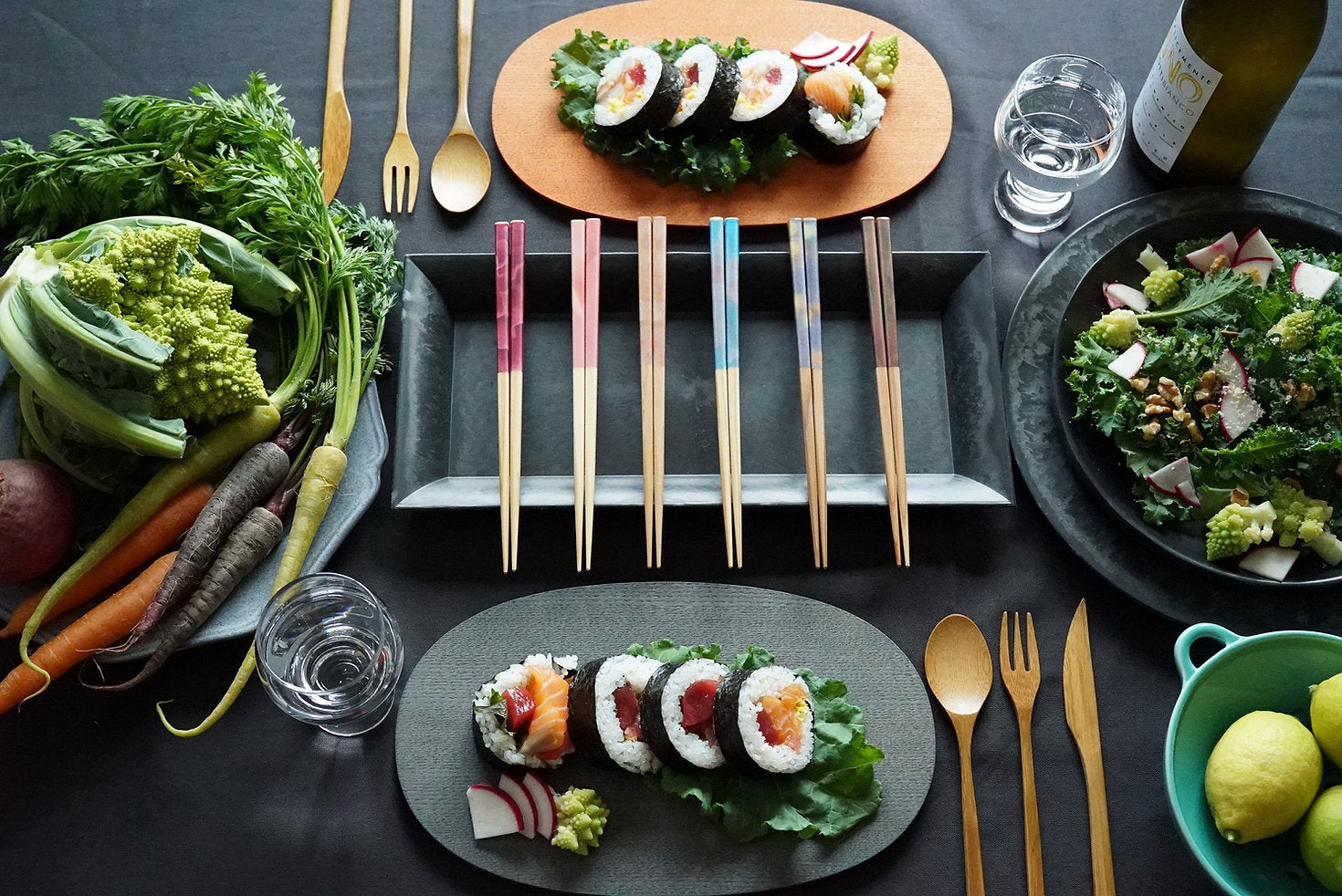
From traditional lacquered cedar to sustainable reusable bamboo — everything you need to know before choosing your next pair of Japanese chopsticks.

Ginza Steel · Sustainable Japanese Chopsticks Collection
一 · ICHI
What Are Hashi? The Cultural Weight of Chopsticks
In Japanese, chopsticks are called hashi (箸) — and they carry far more cultural significance than their simple form suggests. Used for over 1,000 years, hashi are the primary utensil at nearly every Japanese meal, from a quiet bowl of miso soup to an elaborate kaiseki dinner.
Unlike Chinese or Korean chopsticks, Japanese hashi are typically shorter, tapered to a finer point, and designed with precision in mind — reflecting the same philosophy that shapes Japanese knife-making: form serves function, and function is inseparable from beauty.
Choosing the right pair of chopsticks is not a trivial decision. Material, length, taper, and weight all affect how food is picked up, separated, and enjoyed. Ginza Steel's chopstick collection is built on this understanding.
Unlike Chinese or Korean chopsticks, Japanese hashi are typically shorter, tapered to a finer point, and designed with precision in mind — reflecting the same philosophy that shapes Japanese knife-making: form serves function, and function is inseparable from beauty.
Choosing the right pair of chopsticks is not a trivial decision. Material, length, taper, and weight all affect how food is picked up, separated, and enjoyed. Ginza Steel's chopstick collection is built on this understanding.
Types of Japanese Chopsticks
箸の種類 · A Guide to Hashi Styles
菜箸
Sai-bashi
Cooking · 30–40 cm
The culinary workhorse of the Japanese kitchen. At 30–40 cm, these long cooking chopsticks keep hands safely away from heat when stirring, flipping, and plating hot dishes. A staple in professional kitchens.
料箸
Ryō-bashi
Everyday · 24–27 cm
Medium-length chopsticks at 24–27 cm — the go-to for everyday home cooking. They balance versatility with ease of handling, making them the most practical all-purpose choice for the home cook.
皆箸
Kai-bashi
Serving · 18–21 cm
Shorter chopsticks at 18–21 cm, used for serving and plating small dishes. Their compact length adds elegance and precision to culinary presentations — a refined touch at the table.
石井箸
Ishii-bashi
Specialist · 60 cm+
Extra-long chopsticks exceeding 60 cm, reserved for the precise preparation of Japanese sweets and delicate dishes. A tool of specialist craftsmanship — these embody the exacting standards of Japanese culinary tradition.
渡し箸
Watashi-bashi
Communal · Serving
Long serving chopsticks used for communal dining — passing and serving shared dishes at the table. Similar in length to sai-bashi, they are a practical and hygienic choice for family-style meals and restaurant service.
盛り箸
Mori-bashi
Plating · Precision
Slender, fine-tipped chopsticks used by chefs for meticulous food plating and garnishing. The extremely pointed tips allow for the precise placement of delicate ingredients — an essential tool in kaiseki and Japanese fine dining.

持続可能性 · Sustainability
Why Sustainable Chopsticks Matter
Japan uses an estimated 25 billion disposable chopsticks per year — a staggering environmental cost. Switching to a quality pair of reusable hashi is one of the simplest, most meaningful changes a household can make.
Ginza Steel's sustainable chopstick range is built with this responsibility in mind. Materials are selected for longevity, renewability, and the kind of tactile satisfaction that makes you want to use them every single day — because a chopstick that never gets replaced is the most eco-friendly chopstick of all.
Ginza Steel's sustainable chopstick range is built with this responsibility in mind. Materials are selected for longevity, renewability, and the kind of tactile satisfaction that makes you want to use them every single day — because a chopstick that never gets replaced is the most eco-friendly chopstick of all.
二 · NI
Chopstick Sizing Guide — Finding Your Perfect Length
The correct chopstick length is not one-size-fits-all. In Japan, the traditional rule is that the ideal chopstick length equals 1.5× the distance from the tip of the thumb to the tip of the index finger when held at a right angle — roughly one "span." In practice, most adult chopsticks fall between 22–25 cm, but the right length depends on hand size, use case, and personal preference.
| Length | Best For | Notes |
|---|---|---|
| 18–21 cm | Children (ages 3–10) | Shorter for smaller hands; easier grip control during learning |
| 21–23 cm | Women / Smaller hands | Standard Japanese women's length; precise and lightweight |
| 23–25 cm | Men / General adult use | Most versatile length; suits the widest range of hand sizes |
| 25–28 cm | Larger hands / Western users | Extra reach; comfortable for those new to chopstick use |
| 30–45 cm | Cooking (Saibashi) | Heat protection; used for stirring, frying, and plating hot dishes |
三 · SAN
How to Choose the Right Chopsticks
Beyond length, several factors determine whether a pair of chopsticks will feel natural in your hand:
Tip shape: Pointed tips (characteristic of Japanese hashi) allow precise picking of fish, bones, and delicate ingredients. Blunter tips are better for sticky rice or noodles.
Material weight: Lightweight bamboo and cedar feel almost effortless over a long meal. Hardwood and lacquered chopsticks carry a pleasing heft that many experienced users prefer.
Surface texture: A lightly textured or matte-finished tip dramatically improves grip on slippery foods. Fully polished lacquer is elegant but requires more technique.
Reusability: For daily use and sustainability, a well-made reusable pair always outperforms disposable alternatives — in feel, in the environment, and over time, in cost.
Explore the full range of options in Ginza Steel's eco-friendly chopstick collection →
Tip shape: Pointed tips (characteristic of Japanese hashi) allow precise picking of fish, bones, and delicate ingredients. Blunter tips are better for sticky rice or noodles.
Material weight: Lightweight bamboo and cedar feel almost effortless over a long meal. Hardwood and lacquered chopsticks carry a pleasing heft that many experienced users prefer.
Surface texture: A lightly textured or matte-finished tip dramatically improves grip on slippery foods. Fully polished lacquer is elegant but requires more technique.
Reusability: For daily use and sustainability, a well-made reusable pair always outperforms disposable alternatives — in feel, in the environment, and over time, in cost.
Explore the full range of options in Ginza Steel's eco-friendly chopstick collection →
箸置き · Hashioki
The Chopstick Rest — Small Detail, Big Meaning
In Japanese table etiquette, chopsticks are never left resting across a bowl or standing upright in food — both carry inauspicious associations. The hashioki (箸置き), or chopstick rest, is how hashi are properly set between bites and at the end of a meal.
A beautiful wooden stand is as much a part of the table as the chopsticks themselves — a quiet signal of care and intention in how the meal is presented.
A beautiful wooden stand is as much a part of the table as the chopsticks themselves — a quiet signal of care and intention in how the meal is presented.

四 · SHI
Caring for Your Reusable Chopsticks
Quality hashi reward proper care with years — sometimes decades — of use. A few simple habits make the difference:
Wash by hand using mild soap and warm water. Avoid soaking or leaving submerged — prolonged water exposure can warp wood and crack lacquer. Dishwashers are too harsh for wooden or lacquered chopsticks.
Dry immediately and store upright or flat, never in a damp drawer. Good airflow between uses prevents mould and odour.
Re-oil periodically (for untreated wood chopsticks) with food-safe mineral oil or camellia oil — the same care principle that applies to Japanese knife handles.
Inspect the tips regularly. A frayed or splintered tip on wooden chopsticks should be lightly sanded smooth before it worsens.
Wash by hand using mild soap and warm water. Avoid soaking or leaving submerged — prolonged water exposure can warp wood and crack lacquer. Dishwashers are too harsh for wooden or lacquered chopsticks.
Dry immediately and store upright or flat, never in a damp drawer. Good airflow between uses prevents mould and odour.
Re-oil periodically (for untreated wood chopsticks) with food-safe mineral oil or camellia oil — the same care principle that applies to Japanese knife handles.
Inspect the tips regularly. A frayed or splintered tip on wooden chopsticks should be lightly sanded smooth before it worsens.
持続可能な箸
Shop Ginza Steel
Sustainable Chopsticks
Sustainable Chopsticks
Eco-friendly materials. Japanese craftsmanship. Built to replace disposables for good — and beautiful enough to use at every meal.
Shop Chopsticks →