Understanding Shirogami White #2 Steel – The Heart of Traditional Japanese Carbon Steel Knives
白紙
Ginza Steel · Knife Knowledge Series
Japanese White #2 Steel
Why Enthusiasts Love It
白紙二号鋼 · Shirogami #2
Why Enthusiasts Love It
The carbon steel that built Japanese knife culture — and why it still belongs in every serious kitchen.
The Classic Carbon Steel
Among all the steels used in Japanese knife-making, White #2 (Shirogami #2) holds a special place. It is the steel that generations of craftsmen have relied on to produce blades of extraordinary sharpness — and it remains one of the purest expressions of what a Japanese kitchen knife can be.

White #2 · Shirogami
Ginza Steel — Japanese White #2 carbon steel knife, hand-forged in Japan
Ginza Steel — Japanese White #2 carbon steel knife, hand-forged in Japan
What Is White #2 Steel?
White #2 steel, known in Japanese as Shirogami #2 (白紙二号鋼), is a high-carbon steel produced by Hitachi Metals. It belongs to the Shirogami (white paper steel) family — named for the white paper wrapping used to distinguish it from the yellow and blue paper grades in the factory.
With a carbon content of approximately 1.0–1.1%, White #2 is a very pure steel with minimal alloying elements. This purity is exactly what makes it extraordinary in the hands of a skilled craftsman — it responds beautifully to forging, heat treatment, and sharpening in ways that more complex steels simply cannot match.
"White #2 is not a forgiving steel. It demands respect — but it rewards those who offer it with a cutting edge unlike anything else."
Because it contains no chromium, White #2 is a reactive carbon steel. It will develop a patina over time and requires more care than stainless alternatives. For many enthusiasts, this is part of the appeal — the blade becomes personal, developing character with every use.

Takumi · Artisan
A Ginza Steel takumi with a finished White #2 blade
A Ginza Steel takumi with a finished White #2 blade
Why Enthusiasts Love It
Knife enthusiasts and professional chefs return to White #2 for one reason above all others: the edge. When properly sharpened, a Shirogami blade achieves a level of keenness that is difficult to describe — it glides through ingredients with almost no resistance, producing clean cuts that preserve texture and flavour.
Unlike stainless steels, White #2 sharpens very easily and responds quickly to whetstones, even basic ones. This means you can bring it back to a razor edge in minutes rather than sessions. For those who enjoy the ritual of sharpening, it is deeply satisfying steel to work with.
Its simplicity is also its strength. With fewer alloying elements interfering, the blade's behaviour is predictable and honest — making it a favourite tool for traditional Japanese knife forms like Yanagiba, Deba, and Nakiri.
01
Exceptional Sharpness
The fine grain structure of White #2 allows it to take an incredibly acute edge — finer than most stainless steels can achieve at the same hardness.
02
Easy to Sharpen
Responds quickly to whetstones of all types. Even a basic 1000-grit stone can restore a working edge in just a few minutes.
03
Traditional Forging
White #2 is the steel of choice for traditional Japanese forging methods including honyaki and san-mai construction — it behaves predictably under the hammer.
04
Living Patina
As a reactive steel, it develops a unique patina over time that actually protects the blade surface and makes each knife completely individual.
05
High Hardness
Typically hardened to 62–65 HRC, giving it excellent edge retention for a carbon steel — the blade holds its edge well through demanding kitchen use.
06
Pure Composition
Minimal alloying elements means the steel's behaviour is clean and consistent — forgers and sharpeners alike know exactly what to expect.

The Forge
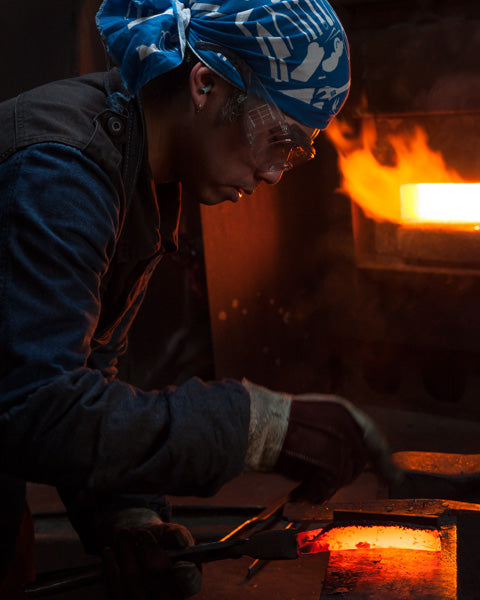
Hand-forging a White #2 blade — heat, hammer, and generations of technique
Hand-forging a White #2 blade — heat, hammer, and generations of technique
Forged by Hand in Japan
Every Ginza Steel White #2 knife begins in the forge. The steel is heated, shaped under a hammer, and cooled with precision — a process that aligns the grain structure and determines the character of the final blade.
The forge is where White #2 shows its true nature. Its purity makes it responsive to temperature changes in ways that alloyed steels are not, giving skilled smiths a level of control that is unique to this material. The resulting blade carries the marks of the process — and all the performance that comes with it.
Traditional heat treatment (yakiire) is applied to bring the steel to its peak hardness before the blade is ground, polished, and fitted with a handle by the craftsman's hands.
Ginza Steel · Knife Construction
Behind the blade — Ginza Steel knife construction from forge to finish
White #2 vs Other Popular Steels
| Property | White #2 | White #1 | SG2 (Stainless) |
|---|---|---|---|
| Sharpness Potential | Exceptional
|
Exceptional+
|
Excellent
|
| Edge Retention | Very good
|
Excellent
|
Outstanding
|
| Ease of Sharpening | Very easy
|
Easy
|
Requires skill
|
| Rust Resistance | Reactive — needs care | Reactive — needs care | Excellent stainless |
| Best For | Enthusiasts, traditional forms, professionals | Advanced users, ultra-precision work | Low-maintenance, everyday pro use |
Caring for Your White #2 Knife
White #2 is reactive carbon steel. With the right routine, maintenance takes only a few moments and the rewards are immense — a blade that improves with every use.
-
1
Dry Immediately After UseNever leave a White #2 blade wet. After rinsing, dry thoroughly with a cloth — this prevents surface rust from forming on the reactive steel.
-
2
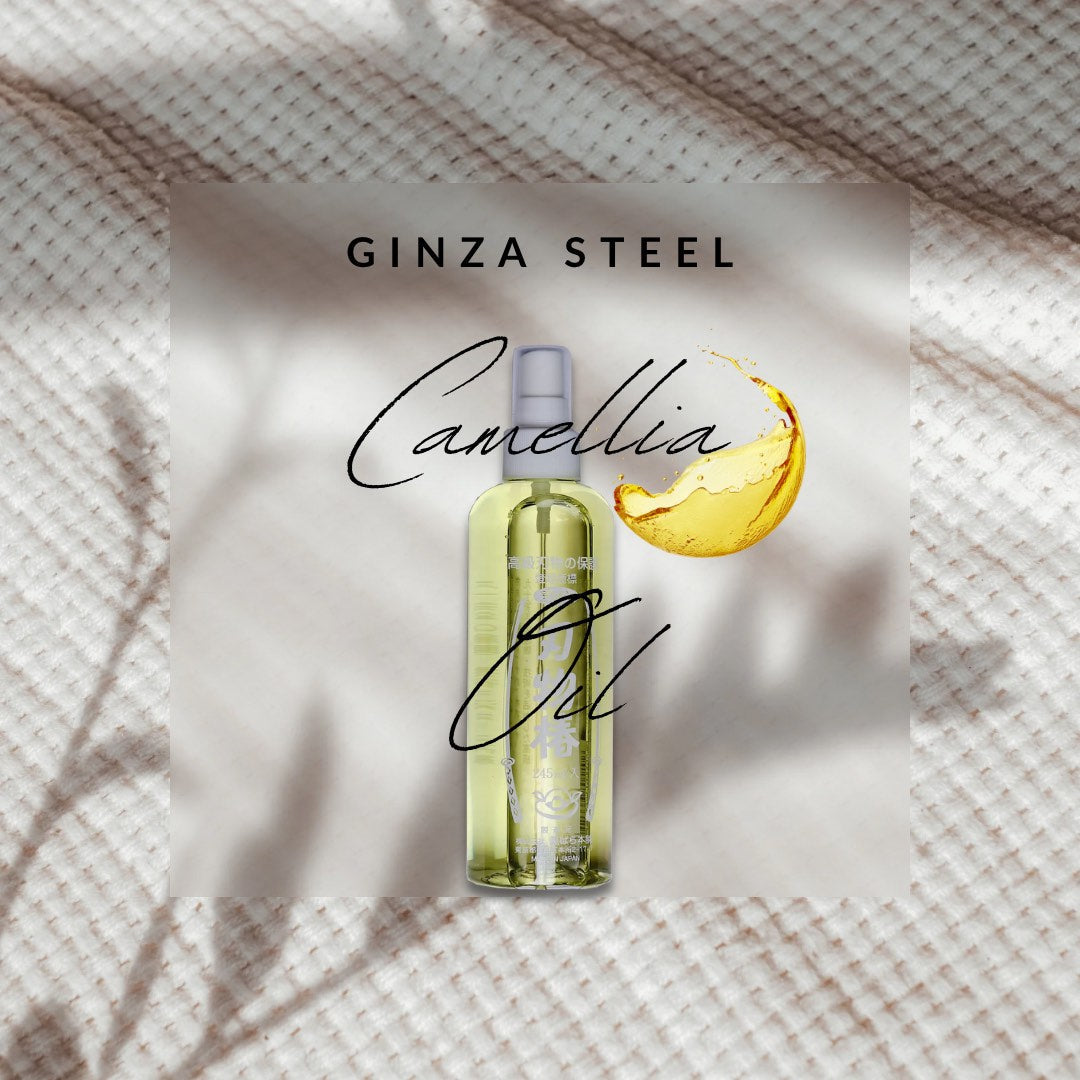
Apply a Light Oil CoatingIf storing for more than a few days, wipe the blade lightly with food-safe camellia oil or a neutral cooking oil. This protects against oxidation during storage.
-
3
Welcome the PatinaA dark patina will develop with use — this is natural and desirable. It acts as a mild protective layer and reduces the chance of surface rust forming during cooking.
-
4
Sharpen RegularlyWhite #2 is one of the easiest carbon steels to sharpen. A quick session on a medium-grit whetstone (1000–2000) followed by a finishing stone keeps it at peak performance.
-
5
Avoid the DishwasherAlways hand-wash only. Dishwasher heat and detergent will damage both the blade and the handle, and will accelerate unwanted surface rust.
Is White #2 Right for You?
White #2 is not the easiest steel to own — but it is one of the most rewarding. If you are comfortable with a small amount of maintenance, enjoy the ritual of sharpening, and want the sharpest possible edge in your kitchen, it is one of the best choices you can make.
"It is the steel that teaches you to cook — and to care."
If you prefer a low-maintenance blade that you can use and wash without concern, a stainless option like VG10 or SG2 may serve you better in daily life. But for those who want to understand what Japanese knife-making is truly about, White #2 is where the conversation begins.
Shop Ginza Steel
Discover Our White #2 Knives
Explore the Ginza Steel collection of hand-forged Japanese White #2 steel knives — crafted in Japan, built for those who take their cooking seriously.

Written by Online Support