Qu'est-ce qui fait de l'acier Silver #3 (Gingami No.3) un choix privilégié pour les chefs japonais ?
(Gingami No.3)est-il un choix privilégié des chefs japonais ?

L'acier Argent #3 — également orthographié Gingami No.3, Ginsan, Ginsan-ko, ou simplement G3 — est un acier inoxydable de première qualité produit par Hitachi Metals (aujourd'hui Proterial Ltd.) sous leur célèbre gamme Yasuki Steel. Le nom lui-même reflète la précision japonaise : gin(銀)signifie argent, san-ko(三号)signifie "numéro trois", et la série fournit les meilleurs ateliers de couteaux japonais depuis des décennies.
L'acier a été conçu avec un objectif ambitieux unique : reproduire les caractéristiques de tranchant rasoir et la structure à grain fin des aciers au carbone japonais traditionnels — en particulier l'Acier Blanc #2 (Shirogami) — tout en ajoutant suffisamment de chrome pour résister aux taches. Le résultat est un acier largement décrit par les aiguiseurs de Sakai comme "l'acier inoxydable avec une âme."
(炭素量)
(クロム含有率)
(HRC硬度)
Contrairement à des alliages plus complexes, l'Argent #3 conserve une composition délibérément pure : une teneur élevée en carbone pour le tranchant, suffisamment de chrome pour la résistance aux taches, et rien de plus. Pas de vanadium, pas de cobalt, pas de molybdène. Cette simplicité est intentionnelle — une structure d'acier pure à grain fin qui répond magnifiquement à un affûtage habile.
- 01
Tranchant de type carbone — sans la rouille L'Argent #3 atteint un tranchant maximal qui rivalise avec l'Acier Blanc #2 — un acier au carbone traditionnel vénéré dans les cuisines professionnelles japonaises. La structure à grain fin permet d'affûter la lame à un tranchant d'une finesse extrême. Pourtant, avec 13 à 14,5 % de chrome, il résiste bien mieux à la corrosion que tout acier au carbone pur. C'est l'équilibre que les cuisiniers professionnels ont toujours souhaité : un tranchant sans compromis, un entretien gérable.
- 02
Facilité d'affûtage exceptionnelle La plupart des aciers inoxydables semblent glissants et peu réactifs sur les pierres à aiguiser. L'Argent #3 est la rare exception. Parce qu'il ne contient pas les éléments complexes formant des carbures (vanadium, molybdène) que l'on trouve dans des aciers comme le VG-10 ou le SG2, la lame adhère naturellement à la pierre et récompense la technique. Les experts en couteaux le classent constamment parmi les aciers inoxydables les plus faciles à ramener à un tranchant de rasoir — ce qui est d'une importance capitale dans une cuisine professionnelle.
- 03
Un caractère tolérant et robuste Une dureté élevée ne signifie pas toujours fragilité — et l'Argent #3 en est la preuve. À 59–62 HRC, il conserve un tranchant compétitif tout en étant plus robuste et plus tolérant que le VG-10 à haute dureté. Les chefs qui travaillent avec des poissons délicats, des coupes de légumes précises ou des plannings de préparation exigeants apprécient un acier qui fonctionne sans s'ébrécher dans des conditions réelles.
- 04
L'acier préféré pour les couteaux japonais à biseau unique L'Argent #3 est l'un des très rares aciers inoxydables auxquels on fait confiance pour les couteaux traditionnels à biseau unique (片刃包丁) — les formes yanagiba, deba et usuba qui définissent la cuisine professionnelle japonaise. Son comportement semblable au carbone lors de la finition permet aux maîtres artisans d'atteindre la géométrie asymétrique et le polissage miroir qu'exigent les couteaux à biseau unique. C'est un honneur que peu d'aciers inoxydables obtiennent.
- 05
Plébiscité par les maîtres sushis du Japon Dans les cuisines à sushis, où une lame doit glisser dans le poisson sans déchirer la chair délicate, la finesse du tranchant est primordiale. La capacité de l'Argent #3 à obtenir un tranchant ultra-raffiné et poli — combinée à la commodité de l'inox — en fait l'acier de choix pour les couteaux yanagiba dans la préparation professionnelle des sushis. Les chefs de cuisine japonaise s'y fient depuis des générations précisément parce qu'il ne transige pas sur la qualité.
Comment le Gingami No.3 se compare-t-il aux autres grands aciers pour couteaux japonais ? Le tableau ci-dessous offre un aperçu pratique pour les chefs et les collectionneurs qui choisissent leur prochaine lame.
| Acier | Dureté (HRC) | Tranchant | Facilité d'affûtage | Résistance à la rouille | Notes |
|---|---|---|---|---|---|
| Argent #3 (Ginsan) | 59–62 | ★★★★★ | ★★★★★ | ★★★★☆ | Le meilleur des deux mondes |
| VG-10 | 60–62 | ★★★★☆ | ★★★☆☆ | ★★★★★ | Plus d'alliages ; meilleure rétention du fil mais plus difficile à affûter |
| Acier Blanc #2 (Shirogami) | 61–65 | ★★★★★ | ★★★★★ | ★☆☆☆☆ | Acier au carbone ; tranchant exceptionnel, nécessite un entretien minutieux |
| Acier Bleu #2 (Aogami) | 62–65 | ★★★★★ | ★★★★☆ | ★★☆☆☆ | Renforcé au tungstène ; excellente rétention du fil, pas de résistance aux taches |
| SG2 / R2 | 63–66 | ★★★★★ | ★★☆☆☆ | ★★★★★ | Acier en poudre ; rétention maximale, nécessite de l'habileté pour affûter |
L'Argent #3 occupe une position intermédiaire unique qu'aucun autre acier ne comble tout à fait : le tranchant et la facilité d'affûtage de l'acier au carbone, associés à la durabilité de l'acier inoxydable et à sa praticité au quotidien. Ce n'est pas l'acier le plus dur, ni le plus résistant à la corrosion — mais pour les chefs qui veulent une lame qui fonctionne magnifiquement et récompense l'habileté, il est extraordinairement attrayant.

Nashiji Nakiri 170mm
Bien que l'Argent #3 soit classé comme acier inoxydable, sa composition relativement simple signifie qu'il offre une protection au chrome légèrement inférieure à celle d'aciers comme le VG-10. Pour une longévité et une performance optimales, traitez votre couteau Gingami No.3 comme un outil précieux :
Après chaque utilisation : Rincez à l'eau tiède, essuyez immédiatement avec un chiffon doux. Évitez de laisser la lame humide ou en contact avec des aliments acides pendant de longues périodes.
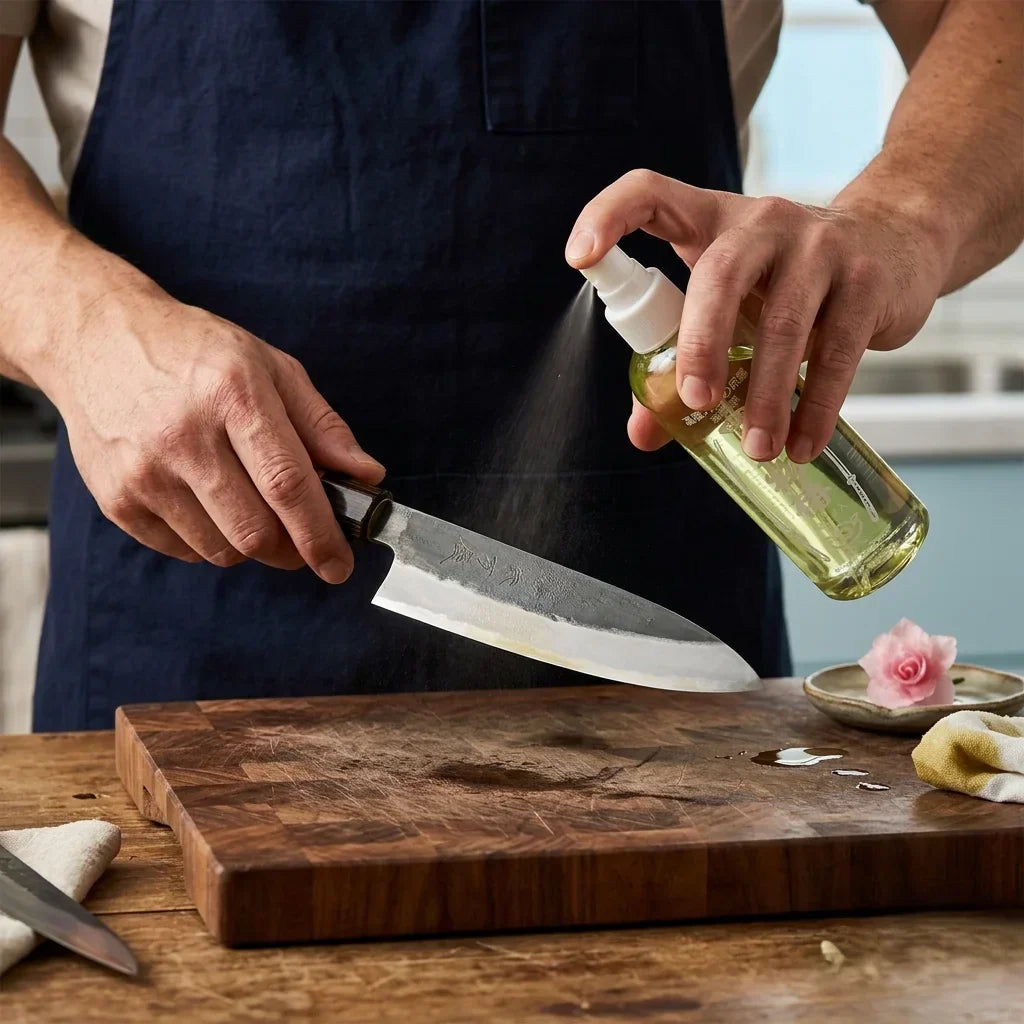
Rangement : Un saya en bois (鞘, fourreau de lame), un bloc à couteaux magnétique ou un étui à couteaux conviennent tous. Évitez les fentes de bloc qui frottent le tranchant. Si vous stockez dans des environnements humides, une légère couche d'huile minérale sur la lame protège l'acier.
Affûtage : C'est là que l'Argent #3 récompense son propriétaire. Utilisez des pierres à aiguiser japonaises de qualité — une 1000 grains pour la réparation du tranchant et une 3000–6000 grains pour le raffinement et le polissage. L'acier répond facilement et développe un tranchant poli miroir qui met en valeur le meilleur de son caractère. De nombreux passionnés de couteaux notent qu'une finition avec une pierre #12000 atteint un niveau de tranchant tout simplement impossible avec le VG-10.
L'Argent #3 (Gingami No.3) est un excellent choix pour :
Les chefs professionnels qui exigent des performances de tranchant exceptionnelles dans des environnements à fort volume et qui apprécient une lame pouvant être rapidement remise en parfait état entre les services.
Les cuisiniers amateurs passionnés qui souhaitent expérimenter le tranchant d'un acier au carbone sans les exigences d'entretien d'un acier au carbone pur — une amélioration significative par rapport aux couteaux en acier inoxydable standard.
Les spécialistes des sushis et de la cuisine japonaise qui nécessitent le tranchant ultra-fin et poli que seul le Ginsan parmi les aciers inoxydables peut offrir pour la découpe délicate du poisson et la préparation des sashimis.
Les passionnés et collectionneurs de couteaux attirés par les lames où l'art du forgeage et la qualité de l'acier se combinent pour créer quelque chose qui dépasse ses spécifications sur le papier.
Si vous passez des aciers inoxydables standard ou si vous recherchez une alternative à l'acier au carbone qui n'exige pas le même niveau de vigilance contre la rouille, l'Argent #3 représente l'un des choix les plus intelligents et les plus satisfaisants disponibles dans l'artisanat des couteaux japonais aujourd'hui.