
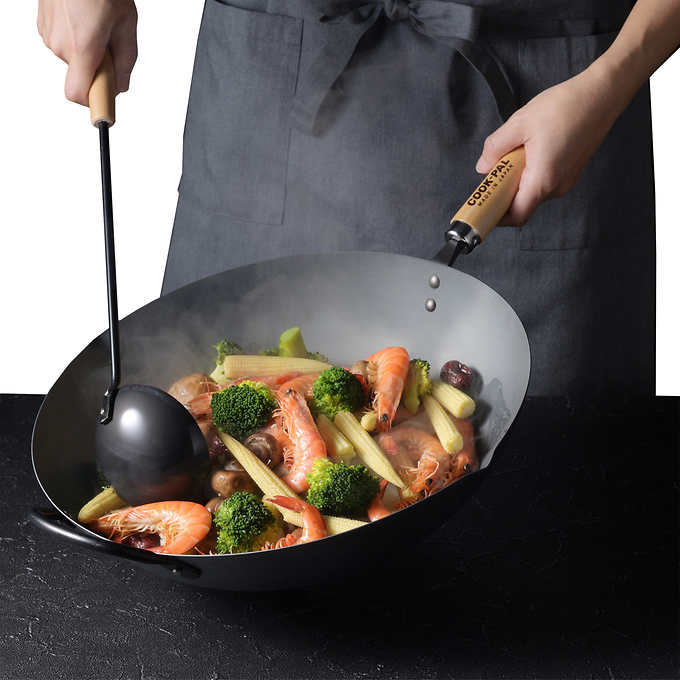
Pourquoi Votre Wok en Acier Carbone Change de Couleur (Et Pourquoi C'est une Bonne Chose)
Si votre wok en acier carbone a commencé à devenir brun, bronze ou noir profond, ne vous inquiétez pas — en fait, il fait exactement ce qu'il est censé faire.
Contrairement à l'acier inoxydable, l'acier carbone est un matériau réactif. Il évolue avec la chaleur, l'huile et le temps. La surface changeante que vous observez n'est pas un dommage — c'est une couche protectrice qui se forme naturellement.

Que se passe-t-il réellement ?
Le changement de couleur provient d'un processus appelé polymérisation du culottage. Lorsque l'huile est chauffée à haute température, elle se lie à la surface métallique et forme un fin revêtement protecteur.
Au fil du temps, les chauffes répétées créent plusieurs couches de ce revêtement. Chaque couche approfondit la couleur — d'un doré clair à un brun profond, jusqu'au noir.
Pourquoi C'est une Bonne Chose
Un wok plus foncé n'est pas qu'une question d'esthétique — cela améliore directement la performance.
- Meilleure surface antiadhésive : Les aliments se détachent plus facilement avec le temps.
- Meilleure réponse thermique : Les surfaces culottées répartissent la chaleur plus uniformément.
- Protection contre la rouille : Le revêtement protège l'acier brut de l'humidité.
- Saveur rehaussée : Les huiles et les couches de culottage développent un « caractère » subtil au wok.
Ce que Signifie la Progression des Couleurs
Vous pouvez en réalité « lire » l'histoire de votre wok à travers sa surface.
- Argenté / acier brut : Non culotté, tout juste sorti d'usine
- Doré / brun clair : Formation d'une première couche de culottage
- Brun foncé : Développement d'une surface de cuisson stable
- Noir : Surface entièrement culottée, de qualité professionnelle
Quand Vous Devriez Vous Inquiéter (Cas Rares)
Toute décoloration n'est pas bénéfique. Il existe deux exceptions :
- Taches rouges et écaillées → probablement de la rouille (nécessite un nettoyage et un nouveau culottage)
- Plaques noires collantes → trop d'huile utilisée lors du culottage
Comment Préserver une Couleur Saine
L'objectif n'est pas d'arrêter le changement — mais de bien le guider.
- Séchez toujours immédiatement après le lavage
- Appliquez une très fine couche d'huile après utilisation
- Cuisinez régulièrement — l'usage améliore le culottage plus rapidement que le rangement
- Évitez de le laisser tremper dans l'eau
Réflexion Finale
Pour la plupart des ustensiles de cuisine, le changement signifie détérioration. Pour l'acier carbone, le changement signifie amélioration.
Un wok qui fonce avec le temps ne vieillit pas mal — il devient plus performant, plus stable et plus réactif à chaque utilisation.
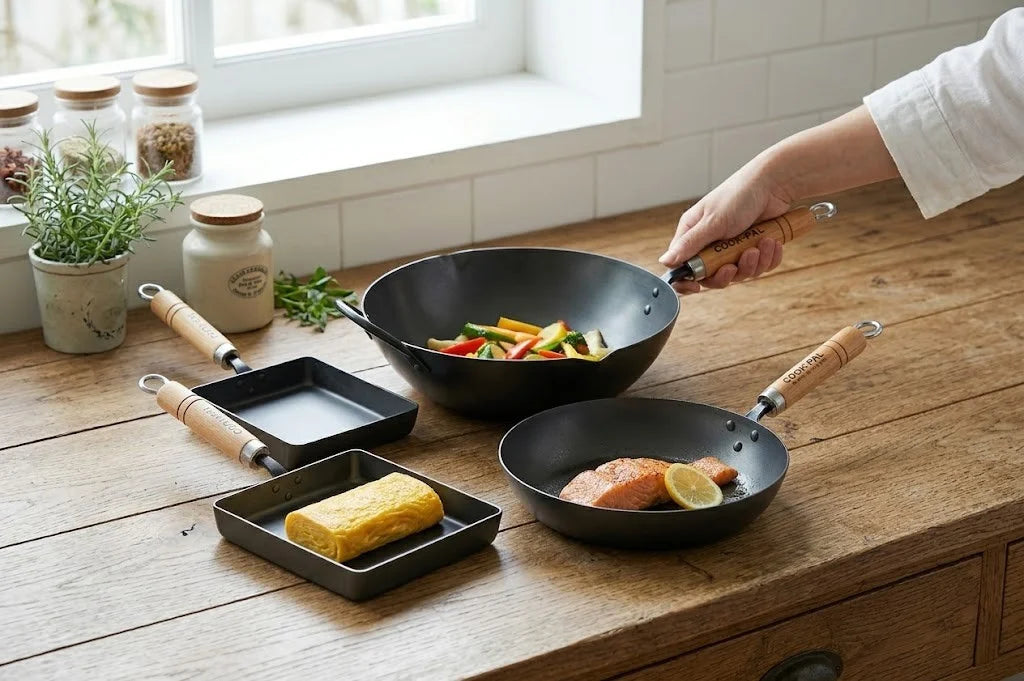
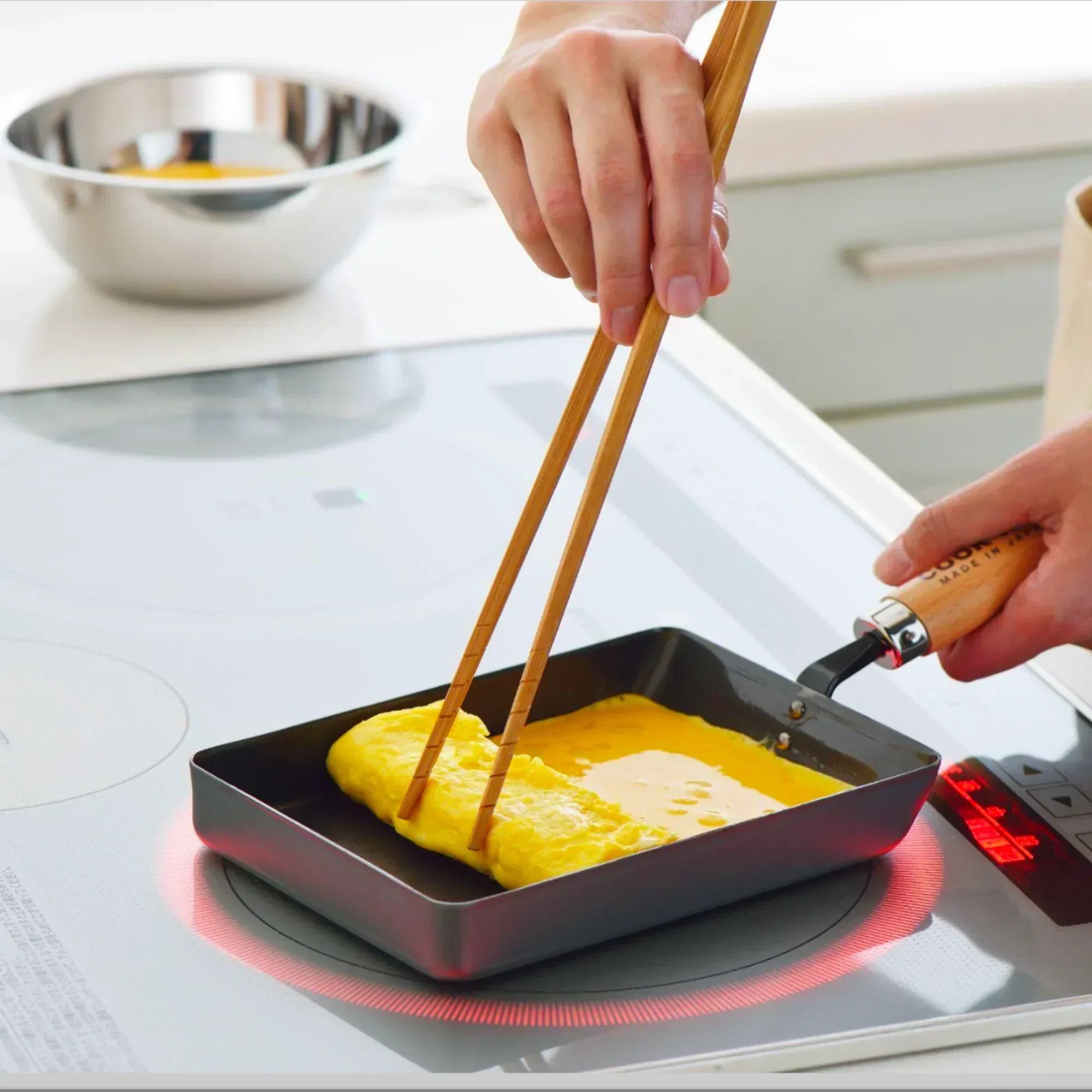
Découvrez la gamme d'ustensiles en acier carbone Yoshikawa Cook Pal Ren.


%0A%20%20Si%20votre%20wok%20en%20acier%20carbone%20a%20commenc%C3%A9%20%C3%A0%20devenir%20brun,%20bronze%20ou%20noir%20profond,%20ne%20vous%20inqui%C3%A9tez%20p...)