
Comment faire un Tamagoyaki (omelette japonaise roulée)

Comment préparer le Tamagoyaki, omelette roulée japonaise, avec la poêle à œufs Yoshikawa
Le Tamagoyaki – littéralement « œuf grillé » – est l'un des plats quotidiens les plus appréciés au Japon. Doux, soyeux et feuilleté, il est un incontournable des bentos, des bars à sushis et des petits-déjeuners familiaux à travers le pays.
Contrairement à une omelette occidentale, le tamagoyaki est construit couche par couche, roulé à mesure que chaque fine feuille d'œuf prend. Le résultat est un rouleau rectangulaire tendre avec un extérieur doré délicat et des couches intérieures moelleuses et crémeuses. Cela semble complexe, mais avec un peu de patience et la bonne poêle, il se réalise magnifiquement.
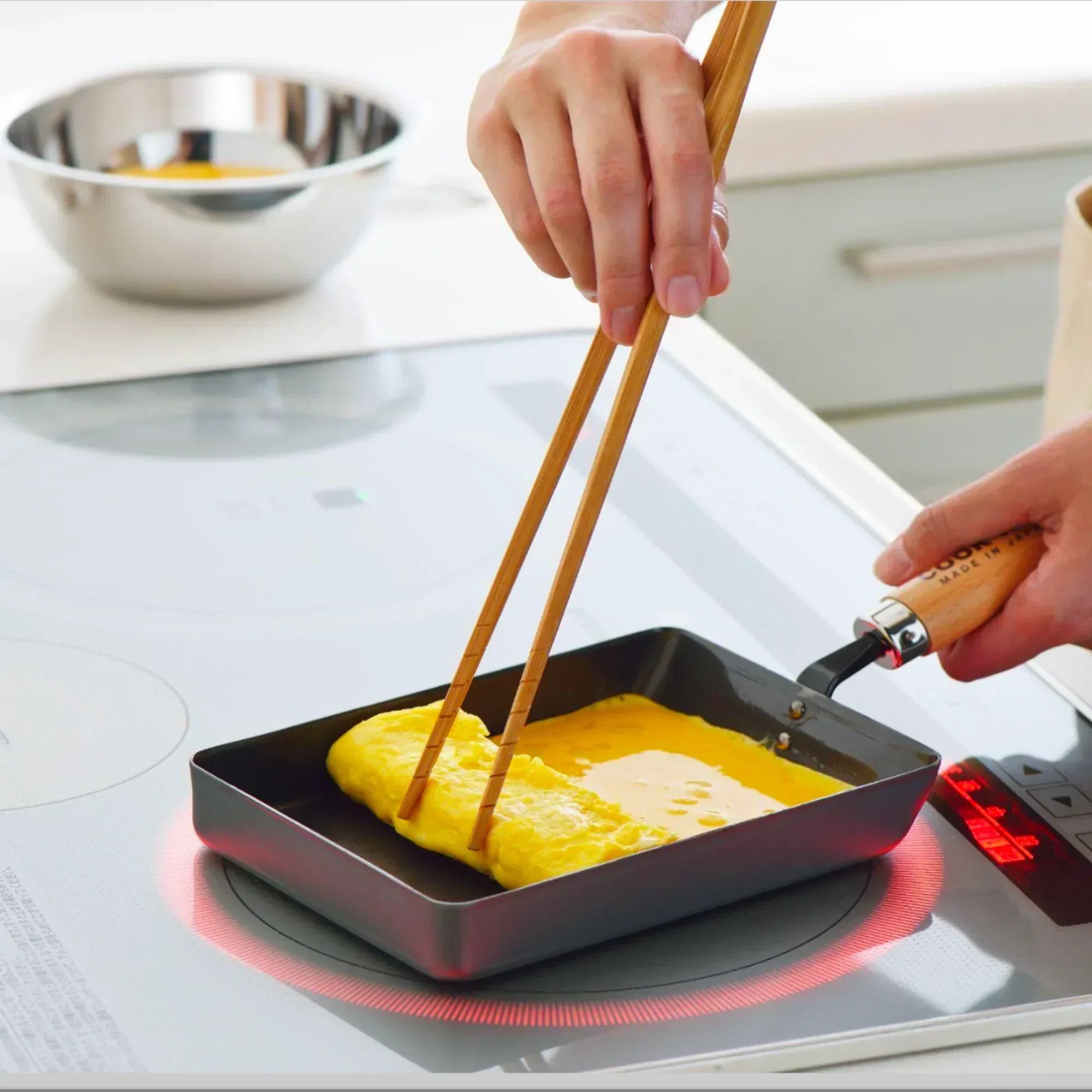
Pourquoi la poêle est importante : Une poêle tamagoyaki rectangulaire facilite le roulage et la mise en forme. La surface en acier au carbone de la Yoshikawa Cook Pal Ren chauffe uniformément et réagit rapidement — essentiel pour que chaque couche prenne juste ce qu'il faut sans trop cuire.
Regardez la préparation
Suivez avant de commencer — voir la technique de roulage en action fait toute la différence.
Ingrédients
Pour servir : radis daikon râpé et un petit filet de sauce soja. Facultatif — graines de sésame noires et blanches.
Méthode
Préparer le mélange aux œufs
Cassez les œufs dans un bol et battez jusqu'à obtenir une consistance lisse. Ajoutez le dashi, la sauce soja, le sucre, le mirin et une pincée de sel. Battez à nouveau jusqu'à ce que tout soit bien combiné. Évitez de trop battre – vous voulez un mélange lisse, pas mousseux.
Chauffer et huiler la poêle
Faites chauffer votre poêle à tamagoyaki à feu moyen-doux. Appliquez une fine couche uniforme d'huile neutre à l'aide d'une serviette en papier ou d'un pinceau à pâtisserie. Testez la température en touchant la poêle avec des baguettes trempées dans l'œuf – si ça grésille doucement, vous êtes prêt.
Verser la première couche
Versez environ un tiers du mélange d'œufs dans la poêle, en l'inclinant pour qu'il se répande uniformément sur toute la surface. Faites éclater les bulles d'air avec des baguettes. Laissez cuire jusqu'à ce que le fond soit juste pris mais que le dessus soit encore légèrement humide — environ 30 à 45 secondes.
Rouler vers vous
En partant du bord le plus éloigné, roulez délicatement l'œuf vers vous à l'aide de baguettes ou d'une spatule, en le repliant sur lui-même par étapes. Poussez l'œuf roulé à l'extrémité la plus éloignée de la poêle.
Ajouter la couche suivante
Re-huiler la surface exposée de la poêle. Versez un autre tiers du mélange d'œufs, en soulevant légèrement l'œuf roulé pour que le nouveau mélange coule en dessous. Laissez prendre comme précédemment, puis roulez à nouveau — cette fois en roulant sur le rouleau existant pour construire les couches.
Répéter et façonner
Répétez l'opération avec le dernier tiers du mélange d'œufs. Une fois terminé, transférez l'omelette sur un tapis de bambou à sushi ou une feuille de film alimentaire, roulez-la fermement et maintenez pendant 2 minutes pour fixer la forme. Déballez et coupez en tranches de 2 cm.
Servir
Servez avec une petite portion de daikon fraîchement râpé, un filet de sauce soja et une pincée de graines de sésame si désiré. Servez immédiatement — le tamagoyaki est meilleur chaud, coupé juste après la cuisson.
Astuces du chef
Ne précipitez pas la cuisson
Moyen-doux est l'idéal. Trop fort, les couches bruniront inégalement et deviendront caoutchouteuses. Une cuisson lente et douce donne cette texture soyeuse et crémeuse.
Chaque couche doit être humide
Roulez tant que le dessus est encore légèrement humide. Cela aide les couches à bien adhérer — les couches entièrement cuites se sépareront une fois coupées.
Pas de dashi ? Pas de problème
Remplacez par 3 cuillères à soupe d'eau froide pour un tamagoyaki plus ferme et plus simple. Ou utilisez une petite pincée de poudre de dashi instantanée dissoute dans de l'eau chaude.
Essayez le nori à l'intérieur
Déposez une feuille de nori entre les couches avant de rouler pour une coupe transversale saisissante et une saveur umami plus profonde. Un favori dans les restaurants de sushis.
Style Tokyo vs style Osaka : Le tamagoyaki de Tokyo (atsuyaki tamago) est plus doux, utilisant plus de sucre et moins de dashi. Le dashimaki tamago d'Osaka utilise un rapport plus élevé de dashi pour un résultat plus soyeux et plus savoureux. Cette recette se situe agréablement au milieu — ajustez le sucre et le dashi à votre goût.
La poêle conçue pour le tamagoyaki — et toutes les techniques qui suivent.