Passer au contenu

Mothers Day Savings Starts Now

Panier

Votre panier est vide

Article: The Japanese Deba Knife: The Ultimate Tool for Fish and Meat Preparation

The Japanese Deba Knife: The Ultimate Tool for Fish and Meat Preparation

The Japanese Deba Knife: The Ultimate Tool for Fish and Meat Preparation


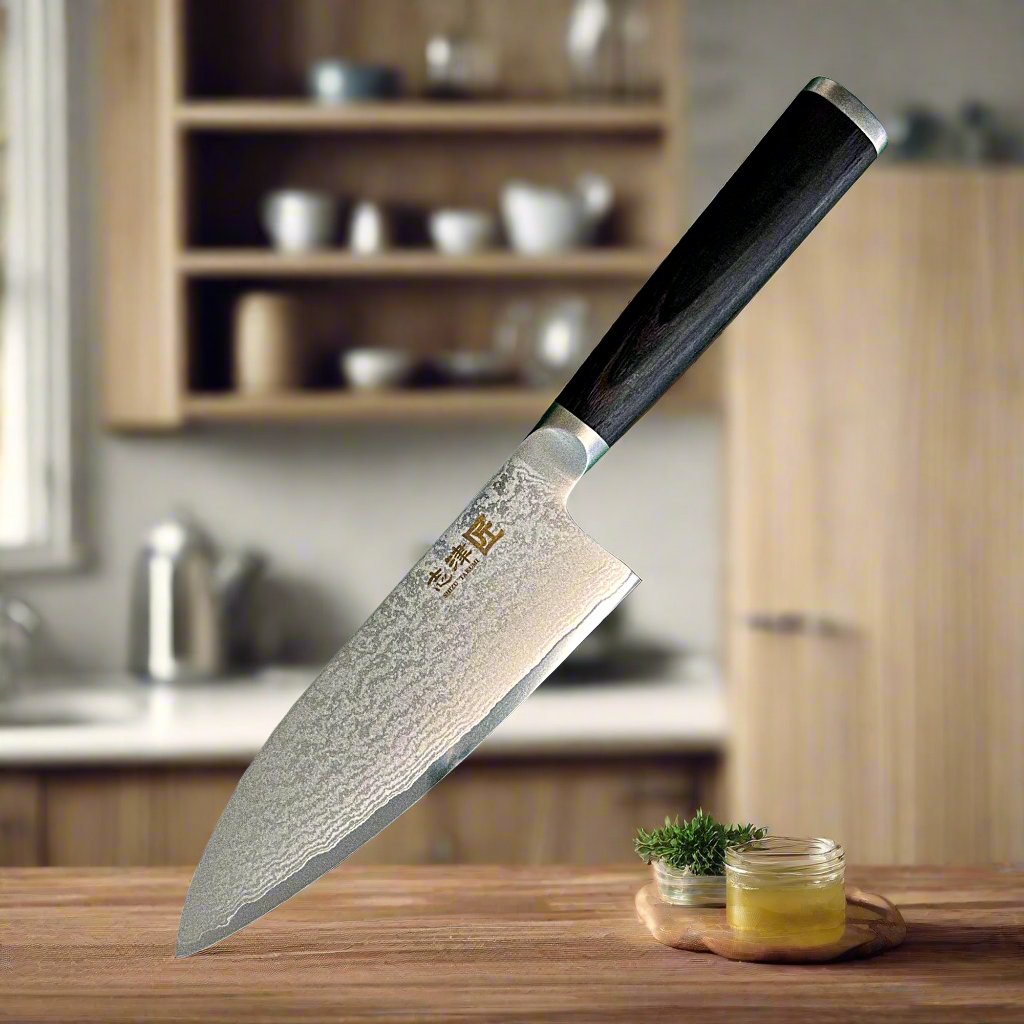
Miyako Deba knife lifestyle
出刃包丁 — Deba-bōchō
The Knife Born for the Sea
Japan's most revered fish knife — thick-spined, single-beveled, and precise enough to turn a whole fish into sashimi-ready fillets.

What Is a Deba Knife?
A Single-Beveled Blade With Two Centuries of Purpose

The Deba knife — known in Japan as Deba-bōchō (出刃包丁) — is one of the most respected tools in the Japanese kitchen. With its thick, wedge-like spine and razor-honed single-bevel edge, it was designed for one task above all others: breaking down whole fish with authority and grace.

Unlike a Western fillet knife, the Deba doesn't flex. Its weight and spine thickness let you crack through small bones and cartilage, while its acute edge angle glides through flesh without tearing. In the hands of a skilled cook, it produces sashimi-grade cuts from a whole mackerel or salmon in minutes.

Over generations, the Deba has extended its role to poultry and small game — anywhere that precision and power must coexist in a single blade.

出刃包丁 Deba-bōchō — "pointed carving knife" — the shokunin's tool for honoring the whole fish
Four Traits That Define the Deba
⚔️ Single-Bevel Edge Ground on one side only, the flat back and hollow ura create a geometry that maximises sharpness and reduces drag. The result is near-surgical control when separating flesh from bone — cuts that don't compress or bruise the meat.
🪨 Thick, Weighted Spine Where a gyuto tapers thin, the Deba stays robust. That mass isn't dead weight — it's momentum. A short, controlled chop through the collar bone of a fish or the joint of a chicken uses the blade's own weight to do the work.
🔥 High-Carbon or Damascus Steel Traditional Deba knives are forged from high-carbon steels like White #2 or Blue Steel for extreme sharpness and easy re-sharpening. Modern versions in VG10 Damascus or SUS stainless offer superior corrosion resistance without sacrificing edge quality.
🌿 Ho Wood or Composite Handle The traditional octagonal or D-section handle in Magnolia (Ho) wood sits lightly in the hand and aligns the wrist naturally for downward cuts. Contemporary models pair the blade with stabilised wood or resin for moisture resistance.
How to Use a Deba Knife
Deba knife in use
  • Breaking Down Whole Fish Insert the tip just behind the pectoral fin at a slight downward angle. A single, deliberate stroke through the collar — using the weight of the blade — cleanly severs the head. Work from head to tail for perfect fillet separation.
  • Filleting and Skinning With the fish flat and the spine toward you, ride the blade along the backbone in a single drawing stroke. The acute angle of the single bevel keeps the blade against the bone without gouging — maximising yield.
  • Cutting Through Small Bones For pin bones, ribs, or small poultry joints, position the thickest part of the blade over the target and use a short, weighted downward chop. Never twist — the single bevel isn't designed for lateral leverage.
  • What to Avoid The Deba is not a cleaver. Avoid large poultry or beef bones, frozen product, and prying motions. These will chip or warp even high-quality carbon steel.
Size Guide: Which Deba Is Right for You?
Blade Length Best For Typical User
90 – 120 mm Small fish (sardines, trout, mackerel), single fillets, delicate work Home cook, apartment kitchen
150 – 165 mm Mid-size fish (sea bass, red snapper), chicken breakdown, everyday tasks Enthusiast home cook, culinary student
180 – 210 mm Large fish (salmon, yellowtail), restaurant-volume prep, poultry Professional chef, serious fishmonger
Our Deba Knife Collection
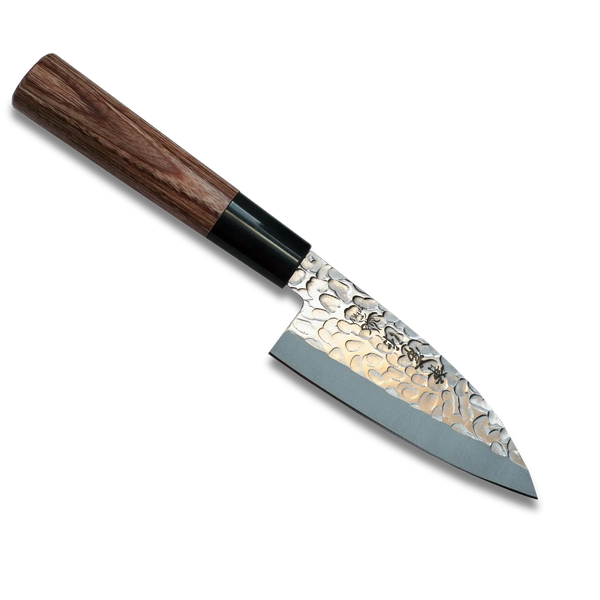
Kanetsune KC-950 Deba 105mm
Kanetsune Japan
KC-950 Chef's Deba Knife 105mm
A compact, made-in-Japan Deba ideal for home kitchens and smaller fish. Beautifully balanced and easy to manoeuvre, it's the perfect entry point into traditional Japanese single-bevel cutting.
View Product →
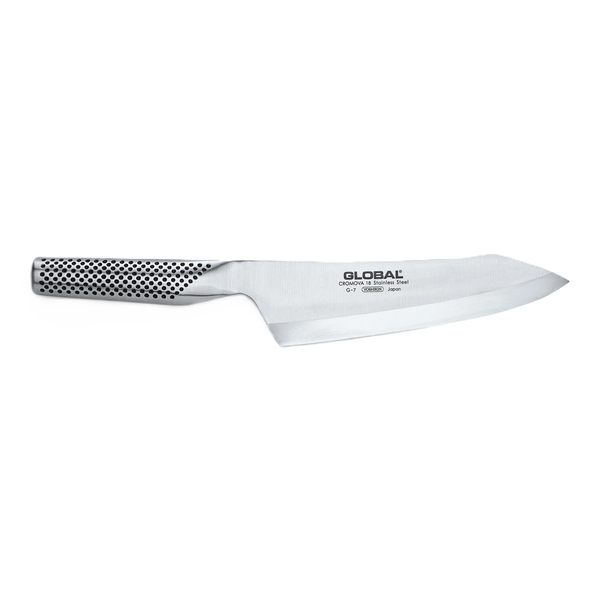
Global Oriental Deba 18cm
Global Knives Japan
Oriental Deba / Butcher Knife 18cm
Global's iconic stainless monosteel construction meets the Deba form. The 18 cm blade handles larger fish and poultry with ease. Dimpled handle, seamless design, and dishwasher-optional for the modern kitchen.
View Product →
Miyako SUS 165mm Deba Damascus
Shikisai Miyako Japan
SUS 165mm Deba — 33-Layer Damascus
A showpiece and a workhorse. The 33-layer Damascus cladding over a SUS core delivers stunning visual flow along the blade, while the 165 mm length handles everything from sea bream to whole chicken. Right-hand specific.
View Product →
Keeping Your Deba at Its Best
🚿 Hand Wash Only Never place a Deba knife in a dishwasher. The high-temperature jets and alkaline detergent will strip the edge and can crack a traditional wooden handle within a few cycles.
🧺 Dry Immediately Carbon steel in particular will oxidise if left wet. Wipe the blade from spine to edge (not edge to spine) with a cloth immediately after rinsing. Store it in a saya or on a magnetic rack — not loose in a drawer.
🪨 Whetstone Sharpening Single-bevel knives require whetstone sharpening — not a honing rod, not a pull-through sharpener. Sharpen the flat bevel side only, then lightly deburr the flat back. Start at 400–1000 grit, finish at 3000–6000.
Need sharpening supplies? Explore our Knife Care & Sharpening collection — whetstones, honing rods, and strops.
Shop Sharpening →
Deba Knife FAQ
What is the difference between a Deba knife and a fillet knife?
A Western fillet knife is thin, flexible, and double-beveled — designed for following the contours of a fish under gentle pressure. The Deba is thick, rigid, and single-beveled. That stiffness lets it power through small bones the fillet knife would deflect around, while the single bevel produces a cleaner cut face with less tearing of the proteins.
Can I use a Deba knife on chicken or meat?
Yes — Deba knives are widely used for breaking down whole chickens, duck, and smaller cuts of meat. They handle cartilage and small bones well. Avoid beef knuckles, leg bones, or anything requiring heavy cleaver work: the Deba is not designed to absorb those impacts without chipping.
Is a Deba knife only for right-handed users?
Traditional single-bevel Deba knives are ground for right-handed use. Left-handed versions (Hidari-Deba) exist and can be specially ordered, but most catalog models are right-handed. Double-beveled "Western Deba" or Yo-Deba knives are symmetrical and work for either hand.
What size Deba knife should a home cook buy?
A 150–165 mm Deba is the most versatile size for home use. It's large enough to handle a whole salmon fillet or small chicken, yet still manageable in a standard home kitchen with a standard cutting board. Under 150 mm is excellent for smaller fish; over 180 mm is better reserved for professional prep volume.
How do I sharpen a Deba knife at home?
Use a whetstone — ideally a double-sided stone at 400/1000 and 3000/6000 grit. Sharpen only the beveled side, holding the blade at its existing grind angle (typically 10–15°). After sharpening, lay the flat back of the blade completely flat on the stone and make 3–4 light strokes to remove the wire edge. Do not use a pull-through sharpener: it will destroy the asymmetric geometry.
出刃包丁 — 職人の道具
Find Your Deba at Ginza Steel
From a compact Kanetsune to a hand-forged Damascus Miyako — browse our full Deba collection and bring precision to your fish prep.
Browse Deba Knives →

Read more

How to Protect Your Japanese Knife

How to Protect Your Japanese Knife

Discover how knife guards preserve your blades' sharpness, prevent accidents, and extend the life of your kitchen or outdoor knives. Learn about the best materials, types, and maintenance tips.

En savoir plus